
FBR Digital Invoicing
How FBR Digital Invoicing Helps Reduce Penalties and Delays
Learn how accurate data, timely posting, visible exceptions and organized records can reduce compliance risk and operational delays.
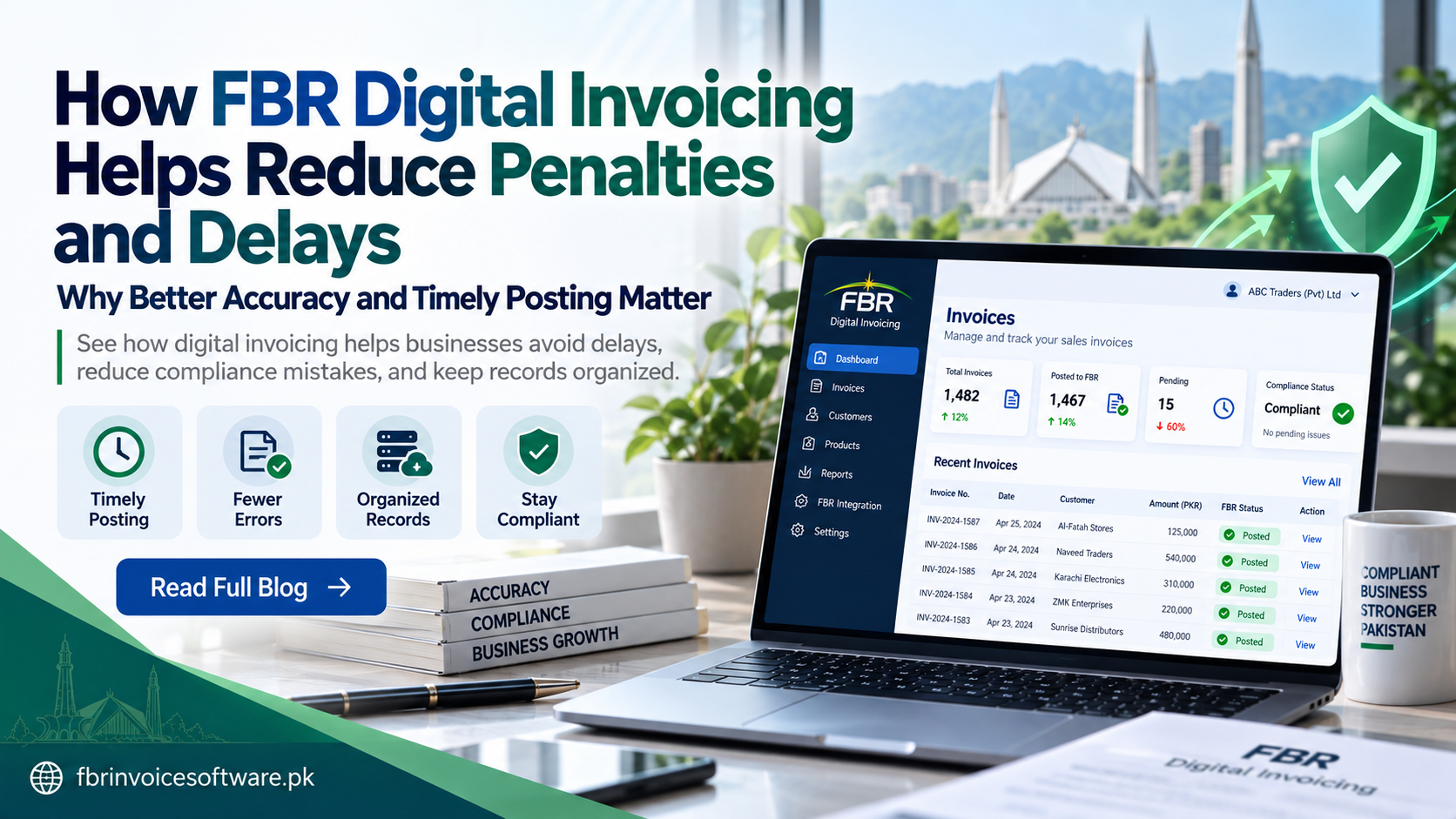
Digital invoicing does not automatically eliminate penalties or guarantee compliance. Its value is that it gives a business stronger controls: required information can be checked earlier, posting can be monitored and unresolved records remain visible instead of disappearing in email or spreadsheets.
Accurate data reduces preventable rework
Reviewed customer, product and tax records reduce repeated typing and inconsistent values. When errors are detected before submission, teams avoid correction cycles that delay the final invoice status.
Timely posting becomes measurable
A dashboard can show sales that are still drafts, invoices waiting for approval and submissions that remain pending. Managers can assign owners and respond before an operational delay becomes a compliance problem.
Exceptions remain visible
Rejected or failed invoices should enter a managed queue with their returned messages and history. Clear visibility prevents staff from assuming that every click resulted in an accepted invoice.
Records support review and reconciliation
Keeping the internal invoice, submission attempt, returned identifier, status and correction history together makes reconciliation faster. It also helps the business explain what happened during an internal or external review.
Automation prevents inconsistent routines
- Required fields can be enforced before submission.
- Duplicate requests can be detected or blocked.
- Pending records can trigger alerts.
- Repeated error types can be summarized for management.
- User access and actions can be logged.
Controls still require people
Automation needs defined ownership. Assign responsibility for master data, daily submissions, exception resolution, access reviews and reconciliation. Train users to distinguish validation success from final acceptance.
Practical risk-reduction plan
- Document relevant deadlines and responsibilities.
- Clean reusable customer and item data.
- Validate every invoice before submission.
- Monitor pending and rejected records daily.
- Keep evidence and response history.
- Review recurring causes and improve the source process.
Whether a penalty applies depends on the law, facts and current official requirements. Use digital invoicing as a control system and obtain appropriate tax or legal guidance for specific obligations.