FBR Digital Invoicing
Top Benefits of FBR Digital Invoicing for Your Business
See how a well-designed digital invoicing process can improve visibility, reduce rework, save time and strengthen business controls.
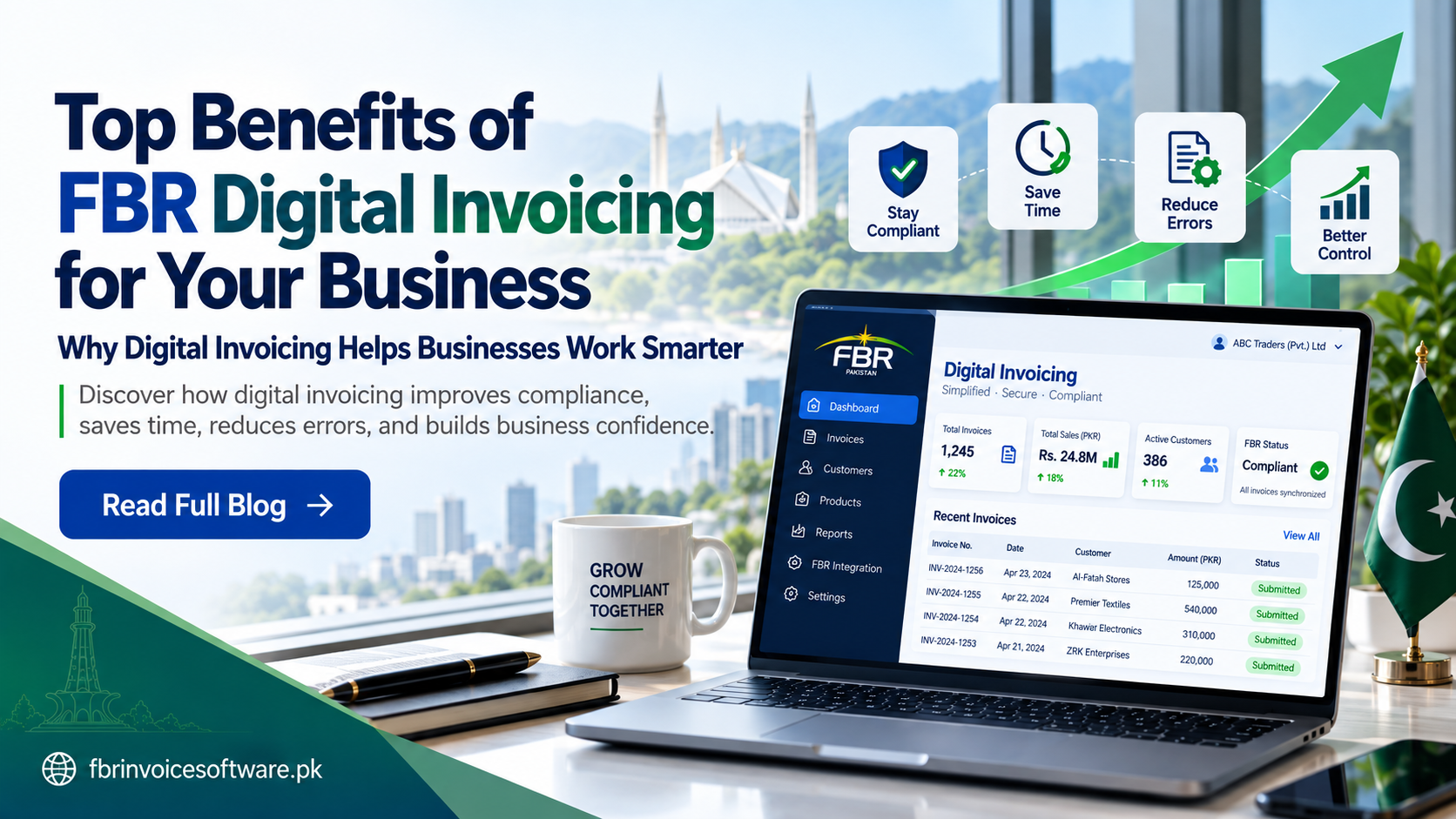
Digital invoicing creates the most value when it improves the complete sales-to-record process, not merely the final submission step. Clean data, early validation and visible statuses can make compliance work more predictable while giving management better operational information.
1. Stronger consistency and compliance controls
Required information can be checked in a standard workflow before an invoice leaves the business. Reusable customer and product records also help teams apply the same reviewed values consistently.
2. Less repetitive manual work
Integrating sales, accounting, ERP or POS data reduces repeated entry. Employees can spend more time reviewing genuine exceptions instead of copying the same customer and item details between systems.
3. Earlier detection of errors
Field-level validation can identify missing identifiers, unsuitable formats and incomplete line items while the invoice is still a draft. Correcting an issue before submission is usually faster than investigating it after rejection.
4. Clear invoice status visibility
A shared dashboard can distinguish draft, validation-failed, pending, accepted and rejected invoices. Finance and operations teams then work from the same status rather than separate spreadsheets and messages.
5. Better audit trail and accountability
User actions, submission attempts, responses and changes can remain linked to the original internal invoice. This helps reviewers understand what happened, when it happened and who resolved an exception.
6. Faster reconciliation and reporting
Structured records make it easier to compare sales, invoice values and returned statuses. Management can identify recurring error categories, delayed locations and incomplete workloads before they become larger problems.
7. A scalable foundation
A defined digital workflow can support additional branches, users and transaction volume more reliably than an informal manual process. Standard data and permissions also make training and handover easier.
How to realize these benefits
- Clean customer, product and tax data.
- Integrate with the system where sales originate.
- Validate before submission.
- Assign owners for pending and rejected records.
- Review performance and exception reports regularly.
Software alone does not guarantee better results. Combine suitable technology with clear responsibilities, trained users and current official guidance.